
Table of Contents
ToggleA riving knife is one of the most underrated safety devices on a table saw, yet it’s often misunderstood or even removed by DIYers who think it gets in the way. If you’ve ever experienced a piece of wood suddenly kick back across the table at high speed, you understand why this small metal blade matters. Whether you’re building a deck, milling lumber, or tackling cabinet projects, a properly installed and maintained riving knife keeps you safer and your cuts cleaner. This guide walks you through what a riving knife does, why it’s essential, and how to set one up correctly, no guesswork required.
Key Takeaways
- A riving knife prevents kickback and binding by keeping the kerf open and blocking wood from pinching back together behind the saw blade.
- Modern riving knives tilt with the blade during angled cuts, making them superior to older fixed splitters that can’t adapt to different blade angles.
- Proper installation requires unplugging the saw, centering the knife in the kerf, and adjusting it to sit about 1/8 inch below the blade’s teeth for maximum safety.
- Table saws cause roughly 30,000 emergency room visits annually in the US, making a well-maintained riving knife your first line of defense against serious injury.
- Routine maintenance is simple: brush away sawdust after each session and check monthly for rust, with replacement knives costing $25–$100 depending on your saw model.
- When replacing a riving knife, always use the exact OEM part for your specific saw model, as compatibility is critical for proper fit in the kerf.
What Is A Riving Knife and Why Your Table Saw Needs One
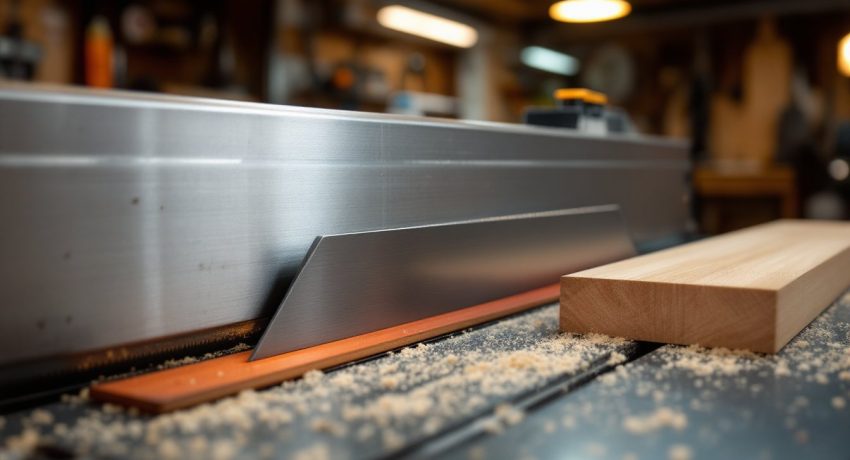
A riving knife is a thin metal blade mounted on the table saw behind the main cutting blade. It’s positioned directly in the kerf (the slot cut by the blade) and sits slightly below the saw blade’s height. Think of it as a metal wedge that tracks the path of your wood as it passes through the blade, keeping the two halves from pinching back together.
On older saws, and some budget models, you’ll find a splitter instead, which is similar but fixed and less adjustable. Modern saws, especially higher-end cabinet saws, use a riving knife because it can tilt with the blade when you make angled cuts, whereas a splitter can’t. This flexibility is why a riving knife is considered the superior safety feature today.
The main purpose is straightforward: prevent the wood from binding on the blade. When the wood behind the blade squeezes back together, it can trap the blade and violently eject the workpiece or cause the blade to pull your hand into the cut. A riving knife keeps the kerf open, letting the wood pass cleanly through without that trapping hazard. It also reduces burning and uneven cutting, so your projects look better right off the saw.
How A Riving Knife Prevents Kickback and Binding
Understanding Kickback and Its Dangers
Kickback is the sudden, violent ejection of a workpiece from the blade, usually back toward the operator. It happens in a split second and can cause serious injury or worse. The most common cause is binding: when the wood pinches behind the blade, the blade either stops dead or grabs the wood and throws it.
Believe it or not, injury statistics show that table saws account for roughly 30,000 emergency room visits annually in the US. Most of these involve kickback or hand contact with the blade. Wearing proper PPE (safety glasses, hearing protection, and an apron if possible) reduces the risk, but engineering safeguards like a riving knife are your first line of defense.
Binding happens because wood is unpredictable. A board with internal stress (from improper storage or natural warping) can shift as it cuts. Wet lumber swells: dry lumber shrinks. A piece tilted even slightly as it enters the blade can catch and pinch. Even “flat” lumber on a table can rock on tiny dust particles and bind unexpectedly.
How The Riving Knife Keeps You Safe
The riving knife is positioned to do one simple job: keep the kerf from closing. As the wood passes through the blade, the knife sits in that kerf just behind the blade, maintaining separation. If the wood tries to pinch back together, the knife blocks it. No pinch, no bind, no kickback.
Here’s the key difference from older splitters: a riving knife on a tilting arbor saw can tilt and move with the blade, so it stays effective at any blade angle. When you tilt the blade for a 45-degree bevel cut, the riving knife tilts too. A fixed splitter, by contrast, won’t tilt with the blade, which means it can’t function safely on angled cuts. That’s a gap in protection.
The height of the riving knife also matters. It should sit about 1/8 inch below the teeth at the top of the blade. Too high, and it contacts the top of the blade. Too low, and it won’t prevent binding effectively. Most modern saws come pre-adjusted, but you’ll verify this during installation and maintenance.
Types of Riving Knives and Choosing the Right One
Not all riving knives are the same, and knowing the differences helps you pick the right replacement or upgrade.
Standard riving knives come as OEM (original equipment manufacturer) parts and are designed specifically for your saw model. They’re usually stamped or machined steel, about 1/8 inch thick, and shaped to fit your saw’s mounting system. If your saw originally shipped with a riving knife, you should always use the exact replacement part. It’s engineered to the blade height and arbor specifications of your machine.
Aftermarket options exist if you’re upgrading an older saw or replacing a damaged knife. Make sure the aftermarket knife matches your saw’s arbor bore and mounting system. Brands like Grizzly, JET, and others offer upgrades to cabinet saws, but compatibility is critical, a misfit knife won’t sit in the kerf properly.
If your saw has a splitter instead of a riving knife, upgrading to a riving knife is worth considering, especially if you do angled cuts. But, not all saws can be retrofitted: it depends on the arbor assembly design. Your saw’s manual or manufacturer support can confirm whether an upgrade is possible.
Thickness matters, too. A riving knife should be between 1/16 and 1/8 inch thick. Too thin and it bends under load: too thick and it doesn’t fit the kerf properly. Standard OEM knives hit the sweet spot.
When choosing a replacement, always reference your saw model and manual. Don’t assume two saws from the same manufacturer use the same knife, they often don’t. A quick call to the manufacturer or a check of the manual saves you from buying the wrong part.
Installation and Maintenance Tips for Homeowners
Installing or inspecting a riving knife isn’t hard, but it requires care and precision.
Before you start, unplug the saw completely. Seriously, even with the power switch off, always unplug. Working on a table saw with power available is asking for trouble.
Step 1: Access the riving knife. On most cabinet and contractor saws, you’ll remove the blade guard and upper blade cover. A few bolts hold the riving knife in place: remove them with the appropriate wrench or socket. Keep them in a small container so you don’t lose them.
Step 2: Inspect or remove the old knife. Look for cracks, bent edges, or rust. If it’s bent or cracked, it needs replacement. Slight surface rust can be cleaned with a wire brush, but deep pitting is a safety issue, replace the knife.
Step 3: Check the kerf width. Measure the width of the kerf with calipers or a straightedge and ruler. The riving knife should fit snugly, no more than 1/32 inch of clearance on either side. If the kerf is wider than expected (perhaps from a worn blade), a different-thickness knife might be needed.
Step 4: Install or reinstall. Line up the knife’s mounting bracket with the arbor housing, insert bolts, and tighten snugly (not cranked down hard, finger-tight plus a quarter turn is plenty). The knife should sit centered in the kerf without touching the blade.
Step 5: Verify height. Raise the blade to full height. The riving knife should sit about 1/8 inch below the blade’s teeth. If it’s too high, the blade will drag it as it rotates. If it’s too low, it won’t prevent binding. Loosen the mounting bolts slightly and adjust the knife up or down if needed, then retighten.
Routine maintenance is simple. After each session, brush away sawdust from the knife. Once a month, wipe it with a dry cloth and check for creeping rust or dust buildup. Store your saw in a reasonably dry place: moisture causes rust. If rust appears, light surface rust comes off with a wire brush or steel wool. Don’t leave rust untreated, it spreads and weakens the metal.
If your knife gets bent in a minor way, a tiny kink that doesn’t affect the kerf, you can sometimes straighten it by carefully tapping it with a soft mallet. But if the bend is significant or if cracking has started, replacement is the safe call. A compromised riving knife is worse than no riving knife at all, because it gives false confidence.
Replacement knives typically cost between $25 and $100 depending on the saw model and supplier. Some homeowners shy away from the cost, but consider the alternative: a kickback injury. The riving knife pays for itself many times over in safety alone.
If your saw didn’t come with a riving knife and you can’t retrofit one, you can find table saw safety reviews and comparisons that highlight which modern models include this feature. When shopping for a new saw, a riving knife (or the ability to add one) should be high on your priority list.
Conclusion
A riving knife is a small device with big responsibilities. It won’t make you a better woodworker, but it will make you a safer one, and it’ll reduce binding, burning, and poor cuts along the way. If your saw has one, keep it clean and properly adjusted. If it doesn’t, seriously consider installing one or upgrading to a saw that includes it. The few minutes you spend on maintenance and the modest cost of a replacement knife are nothing compared to avoiding a serious injury. Your table saw is one of the most useful and most dangerous tools in your shop: treat it with the respect it deserves.