

Table of Contents
ToggleYour shower brush works hard, scrubbing tile, grout, and glass day after day, but how often do you actually clean the brush itself? Most homeowners overlook this simple task, letting bacteria, mildew, and soap scum build up where they’re trying to prevent it. A dirty shower brush spreads grime around instead of removing it, defeats the purpose of your scrubbing efforts, and becomes a breeding ground for unwanted microorganisms. The good news is that keeping your shower brush fresh and germ-free takes just minutes and uses supplies you likely already have at home. This guide walks through practical methods to clean your brush properly, why regular maintenance matters, and how to extend its working life.
Key Takeaways
- A dirty shower brush spreads grime instead of removing it and harbors harmful bacteria like E. coli, making regular cleaning essential for sanitation and effectiveness.
- Clean your shower brush weekly using the hot water and vinegar soak method—the most gentle, inexpensive approach that naturally breaks down soap scum and mineral deposits in just 15–30 minutes.
- Use a diluted bleach solution (1 part bleach to 9 parts water) for monthly deep disinfection when visible mold appears, but never exceed 20 minutes of contact to avoid damaging bristles.
- Proper drying and storage are critical: always stand your shower brush bristles-up in a well-ventilated area after each use to prevent moisture trapping and mold growth.
- Replace your brush when bristles start fraying, pulling out, or show persistent discoloration, as a worn shower brush loses cleaning power significantly.
- Rotate between two brushes or store your brush outside the shower enclosure in humid climates to maximize air circulation and extend the brush’s working life.
Why Your Shower Brush Needs Regular Cleaning
A shower brush sits in a warm, wet environment, basically a petri dish for mold, mildew, and bacteria. Every time you use it, you’re also introducing soap residue, body oils, and dead skin cells into the bristles. If left unchecked, these accumulate and create a biofilm layer that no amount of scrubbing will remove. The bristles themselves trap moisture deep inside, making the problem worse.
When your brush gets dirty, it stops cleaning effectively. You’re essentially pushing old gunk around your shower instead of removing new buildup. This is particularly noticeable on grout lines and corners where you need maximum cleaning power. Beyond performance, a neglected brush becomes unsanitary, studies show that bathroom brushes can harbor E. coli and other harmful pathogens if moisture and organic matter persist.
Regular cleaning extends your brush’s life and ensures it actually does its job. A well-maintained brush lasts months or even years longer than one left to accumulate grime. You’ll also notice your shower tiles stay cleaner longer, and the overall bathroom feels fresher. Think of cleaning your brush the same way you’d maintain any tool, a few minutes of upkeep prevents bigger problems down the road.
Best Methods for Cleaning Your Shower Brush
The Hot Water and Vinegar Soak Method
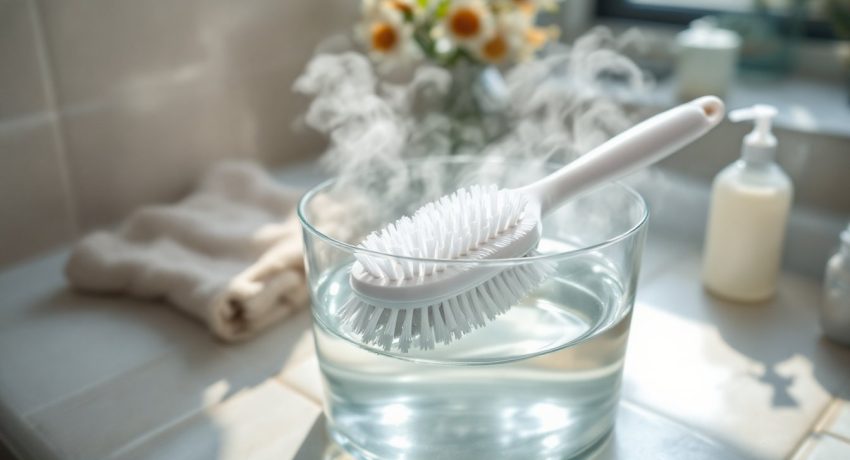
This is the gentlest approach and works well for regular maintenance. Fill a bucket, sink, or tall glass with equal parts white vinegar and hot water (around 120°F is ideal). The heat helps open up the bristles and let water penetrate deep. Place your brush bristles-down in the solution and let it sit for 15 to 30 minutes.
Vinegar is mildly acidic and naturally breaks down soap scum, mineral deposits, and some bacteria without damaging bristles. After soaking, use an old toothbrush or your fingers to gently work through the bristles, loosening any stubborn debris. Rinse thoroughly under hot running water, squeeze out excess water, and stand the brush upright to dry completely.
This method is safe for all brush types, including those with natural bristles or rubber components. It’s also inexpensive and uses a household product. The slight vinegar smell dissipates once the brush dries. Use this method weekly or bi-weekly depending on how much your brush gets used.
Using Bleach for Deep Disinfection
When you need stronger disinfection, say, after noticing visible mold or mildew, or if someone in your household was sick, bleach works fast. Mix one part household bleach (around 3% sodium hypochlorite) with nine parts water in a bucket. This dilution is strong enough to kill pathogens but won’t damage most brush bristles if you don’t exceed 30 minutes of contact.
Important safety note: Always wear nitrile or latex gloves and ensure good ventilation when working with bleach. Never mix bleach with ammonia or other cleaners, the fumes are toxic. Keep the solution away from your face and eyes.
Submerge the brush bristles-down and soak for 15 to 20 minutes maximum. Bleach works quickly, so longer soaks won’t improve results and risk damaging bristles. After soaking, rinse the brush extremely thoroughly under hot running water for at least one minute. Residual bleach can irritate skin, so don’t skip this step. Stand the brush upright in a well-ventilated area to dry.
Use the bleach method no more than once monthly. More frequent bleach exposure can weaken bristles over time, especially synthetic ones. Save this approach for periodic deep disinfection rather than routine cleaning. Many homeowners find that the vinegar method handles day-to-day cleaning perfectly well, reserving bleach only when needed.
Prevention and Maintenance Tips for Long-Lasting Brushes
The best cleaning approach is combined with smart storage habits. Let your brush dry completely after every use, this single step prevents most mold and mildew growth. Stand it bristles-up in a cup, caddy, or corner of your shower where air can circulate around the entire brush. Avoid storing it bristles-down or in a closed container where moisture gets trapped.
If your shower stays constantly humid, consider moving the brush outside the shower enclosure entirely. A small cup on the bathroom counter or shelf with good air exposure works far better than keeping it in a steamy shower stall. Some people rotate two brushes, using one while the other dries in a low-moisture area, this is especially useful in climates where air circulation is tough.
Inspect your brush regularly for visible mold, bristle damage, or a persistent odor that vinegar soaking doesn’t fix. When bristles start fraying or pulling out, or if discoloration won’t come clean, it’s time to replace it. Stiff bristles also indicate aging. A fresh brush costs just a few dollars and cleans far more effectively than a worn one. Electric shower brushes with removable heads offer another option and sometimes come with self-cleaning features, though using an electric cleaning brush still benefits from periodic manual maintenance.
Soap-filled brush heads are convenient but trap water inside the brush body, they require extra-careful drying. Standard bristle brushes without hollow sections are generally easier to maintain. Consider this when choosing your next brush. Establishing a routine, cleaning your brush weekly and checking for moisture issues monthly, keeps it performing at peak level with minimal effort.
Conclusion
Cleaning your shower brush isn’t complicated, but it’s one of those small maintenance tasks that makes a real difference. A quick vinegar soak weekly keeps bacteria and mildew at bay, while proper drying prevents problems from starting. Add an occasional bleach disinfection for peace of mind, and your brush stays fresh and effective for months. These few minutes of upkeep ensure your cleaning tool actually cleans, not spreads grime. Start this week and you’ll notice your shower stays cleaner with less effort.