
Table of Contents
ToggleHard water is a headache whether you’re at home or parked in a national forest. Inside an RV, the problem intensifies, scale buildup clogs fixtures, reduces water pressure, and damages appliances in tight quarters. A water softener for RV systems solves this. Whether you’re a full-time nomad or weekend camper, understanding your options and installation process keeps your plumbing running smoothly and extends the life of your rig’s water systems. This guide walks you through selecting and installing a camper water softener that fits your lifestyle and water needs.
Key Takeaways
- A water softener for RV systems prevents scale buildup that clogs fixtures, reduces water pressure, and damages appliances in confined spaces.
- Salt-based ion exchange softeners reduce hardness by nearly 100% and handle 10–20 gallons per minute, while saltless systems offer 40–60% reduction with lower maintenance and eco-friendly benefits.
- Installation takes 1–2 hours using basic tools like compression fittings and an adjustable wrench, with no soldering required for modern PEX tubing systems.
- Monthly salt refills are needed for salt-based units, while saltless cartridges require replacement every 6–12 months depending on usage and water hardness.
- Test your water hardness before purchasing a water softener—inexpensive test strips reveal mineral content and help you choose between salt-based or saltless systems for your RV.
- Winterizing your water softener with propylene glycol antifreeze prevents freeze damage when shutting down your RV for seasonal storage.
Why RV Water Softeners Matter For Your Mobile Home
Hard water minerals, mainly calcium and magnesium, wreak havoc in confined spaces. In a standard house, you tolerate scale on a showerhead. In an RV, the same buildup clogs your fresh water tank inlet, clogs your faucet aerators, and reduces pressure in your shower and kitchen sink. Your water heater works harder. Your water pump labors. Over months, these mineral deposits coat interior pipes and fixtures, eventually requiring replacement that costs hundreds of dollars and downtime you can’t afford.
RV water systems also see stagnant water more often than home systems. When hard water sits in holding tanks between trips, minerals crystallize faster. A quality water softener for camper setups prevents this. It also protects your water heater element, extends appliance lifespan, and improves water taste, crucial when you’re living from a tank and not a municipal supply.
Most RV owners don’t think about water quality until problems appear. Installing a softening system upfront is preventive maintenance that pays for itself through avoided repairs and appliance replacement.
Types Of Water Softening Systems For RVs
Salt-Based Ion Exchange Softeners
Salt-based softeners are the traditional, proven approach. Resin beads inside the tank exchange calcium and magnesium ions with sodium ions. Hard water enters, minerals get trapped, and soft water exits. When the resin becomes saturated (usually after 20,000–25,000 gallons, depending on water hardness), a regeneration cycle flushes the tank with a brine solution, recharging the resin.
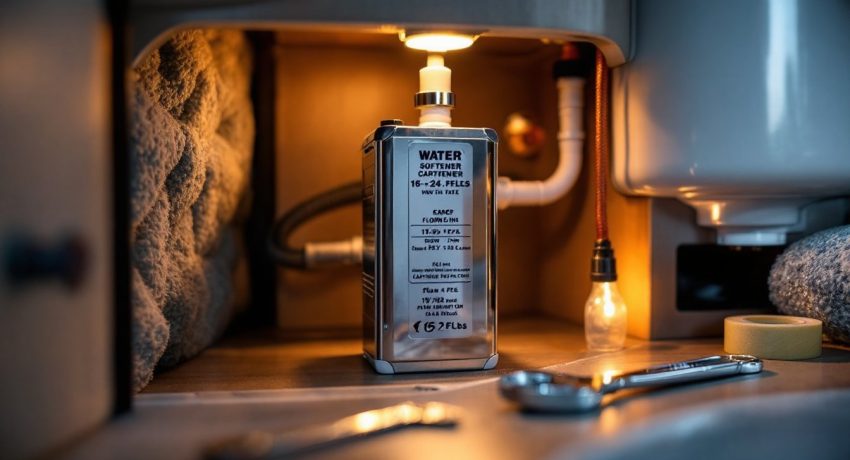
For RVs, compact salt-based models range from 16–24 pounds of resin capacity, small enough to fit under a sink or in a basement cubby, yet capable of handling 10–20 gallons per minute flow rates. Brands like those reviewed in The Best Water Softeners offer portable options designed exactly for mobile living.
The trade-off: you’ll add salt pellets or blocks monthly (depending on usage and water hardness) and occasionally clean the brine tank. For full-time RV dwellers, this routine is manageable: for weekend campers, it’s negligible. Salt discharge also means you can’t use softened water on plants or gardens if you’re parked long-term, something to consider before purchasing.
Saltless Water Conditioning Systems
Saltless (or “saltfree”) systems don’t exchange ions: instead, they use a template-assisted crystallization (TAC) or potassium chloride cartridge to transform minerals into harmless crystals that pass through without adhering to pipes. No regeneration cycle, no salt refills, and softer water that’s garden-safe.
These appeal to eco-conscious RV owners and those wanting simplicity. A cartridge typically lasts 6–12 months before replacement. Flow rates are adequate for campers, and the units are compact.
The limitation: saltless systems don’t soften water to the same degree as salt-based models. Water hardness reduction ranges from 40–60%, versus near 100% for ion exchange. For light-to-moderate hard water, this suffices. For extremely hard water (over 20 grains per gallon), salt-based is more reliable. Test your water hardness before committing: inexpensive test strips (under $10) reveal mineral content at your parking spot.
Installation And Maintenance Essentials
Installation depends on your RV’s existing plumbing and whether you want a point-of-entry (whole-rig) or point-of-use (kitchen or shower only) system. Most modern RVs have 1/2-inch fresh water inlet connections, confirm yours before ordering.
For a whole-system softener: Turn off your fresh water pump. Locate the incoming fresh water line (usually near the water heater or main tank inlet) and install the softener inline using compression fittings (no soldering required on PEX tubing). Most units come with fittings and hose clamps. Tighten by hand, then use an adjustable wrench for a final quarter-turn, don’t over-torque, as this cracks plastic fittings.
For a point-of-use softener: Install under your kitchen sink or attach to your shower inlet. This requires 1/2-inch compression adapters and short runs of tubing (typically 1/2-inch PEX or vinyl hose rated for RV use).
After installation, flush the system with 3–5 gallons of water to clear resin dust or cartridge particles. Turn the pump back on and check for leaks at all connections. If you spot a drip, don’t panic, tighten the fitting slightly. If it persists, turn off the pump, remove the fitting, wrap the male threads with plumber’s tape (2–3 wraps), and reconnect.
Maintenance is straightforward: For salt-based units, check salt levels monthly and top off as needed (typically monthly for full-timers, quarterly for weekenders). For saltless systems, mark your cartridge installation date and plan replacement at the manufacturer’s interval. Some softeners include bypass valves, if your softener fails or is out of service, you can still access water without the unit pressurizing the system.
Store salt or cartridge replacements in a dry compartment. On winter storage, if you’re shutting down your RV, flush the softener with RV-safe antifreeze (propylene glycol, not automotive antifreeze) to prevent freeze damage to the resin or cartridge. Resources like Family Handyman offer detailed winterization guides if you’re prepping your rig for storage.
Conclusion
Choosing a water softener for your RV isn’t glamorous, but it’s one of the smartest preventive investments you can make. Salt-based systems offer maximum hardness reduction and proven reliability, while saltless options suit those seeking low-maintenance, eco-friendly conditioning. Installation takes an hour or two and requires no special skills, just plumber’s tape, a wrench, and attention to leak-free connections. Once running, your pipes stay clean, your appliances last longer, and your morning shower feels luxurious on the road.