
Table of Contents
ToggleA washer and dryer pedestal is one of those simple upgrades that transforms how you interact with your laundry equipment daily. If you’re constantly bending to reach a front-load washer or struggling to retrieve lint from a low-sitting dryer, you’re not alone, and a universal pedestal might be exactly what your laundry room needs. These storage-ready stands elevate your machines 12 to 16 inches, creating accessible work height, adding valuable storage underneath, and making the entire space feel more organized. Whether you’re planning a laundry room refresh or just tired of back strain, understanding what a pedestal can do and how to choose the right one is essential before making the investment.
Key Takeaways
- A universal washer and dryer pedestal elevates your machines 12 to 16 inches, creating ergonomic work height and reducing strain from bending during laundry tasks.
- These pedestals add valuable storage space underneath for detergent, softener, dryer sheets, and cleaning supplies while improving airflow and reducing mold buildup.
- When selecting a universal pedestal, verify exact machine dimensions (typically 24-30 inches wide and 24-32 inches deep) and confirm a weight capacity of at least 350-400 pounds for safe operation.
- Proper installation requires a level floor, adequate clearance on all sides for hose routing, and verification that the pedestal platform matches your appliance footprint to prevent instability.
- A universal washer and dryer pedestal works exclusively with front-load machines; top-load washers are incompatible due to height and stability concerns.
- Metal pedestals with durable enamel or powder coat finishes offer better rust resistance in humid laundry environments compared to bare metal or low-grade plastic options.
What Is A Universal Washer And Dryer Pedestal?
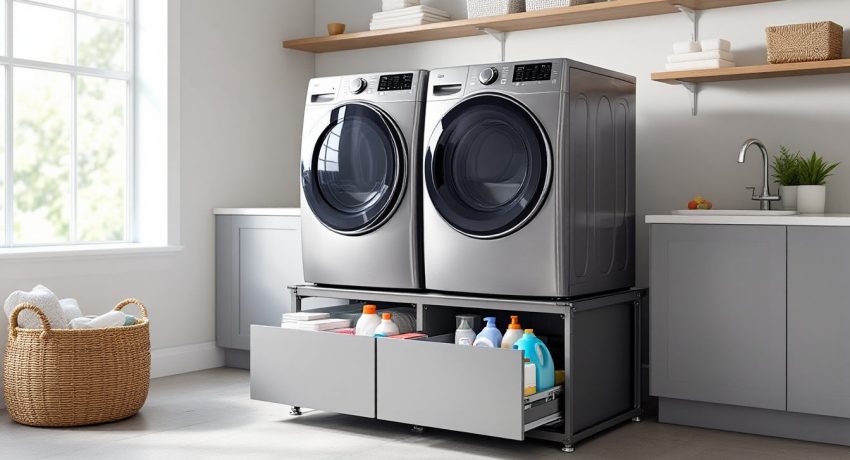
A universal washer and dryer pedestal is a standalone base or storage unit designed to elevate front-load washers and dryers to a more ergonomic height. Unlike brand-specific pedestals that lock into particular machine models, a universal pedestal works with most standard front-load machines regardless of manufacturer, though always verify dimensions before purchasing.
These pedestals typically raise your appliances 12 to 16 inches off the floor, bringing the drum or door to roughly waist height instead of knee level. The base usually includes a drawer, open shelf, or enclosed cabinet that provides handy storage for detergent, softener, dryer sheets, and cleaning supplies. Some designs feature pull-out drawers for easier access, while others offer basic open shelving.
Material-wise, pedestals are most commonly made from painted metal or heavy-duty plastic, both durable enough to support the weight of a fully loaded washer (often 200+ pounds when operating). The platform sits on a reinforced frame with a weight capacity typically between 300 and 500 pounds, depending on the model. Most universal pedestals measure roughly 24 to 30 inches wide, 24 to 36 inches deep, and 10 to 16 inches tall, dimensions that accommodate standard front-load machines but require verification against your specific appliance footprint.
Benefits Of Adding A Pedestal To Your Laundry Setup
The appeal of a washer and dryer pedestal goes well beyond looking neat. Ergonomic improvement is the primary draw: a pedestal eliminates repetitive bending when loading and unloading laundry, which is especially valuable for anyone with back issues, mobility concerns, or simply getting older. Reaching into a machine at knee height versus waist height is the difference between discomfort and ease.
Storage is the second major benefit. That empty space under your appliances becomes a dedicated home for laundry essentials, detergent bottles, fabric softener, lint rollers, stain treatments, and dryer sheets all stay organized and within arm’s reach. No more hunting for supplies scattered across shelves or cabinets elsewhere in the house.
Safety matters too. Elevating machines keeps moisture away from direct floor contact, reducing mold and mildew buildup underneath. Better airflow beneath the washer and dryer also means improved ventilation, which is especially important for dryer exhaust and humidity control in tight laundry rooms.
Finally, pedestals make your laundry area feel intentional and finished. Instead of appliances sitting flat on the floor like an afterthought, they become a cohesive unit with defined storage and better visual balance in the room. This matters if your laundry space is visible from other areas or if you’re planning to eventually sell, a well-organized laundry setup adds to home appeal.
Key Features To Look For In A Universal Pedestal
When shopping for a universal pedestal, several features separate a solid choice from a frustrating one.
Weight capacity is non-negotiable. Your washer will weigh between 150 and 250 pounds empty, and adding water plus a load of laundry pushes that higher. Look for a pedestal rated for at least 350 to 400 pounds to provide a safety margin, never max out capacity. Cheaper pedestals sometimes cut corners here, so verify the manufacturer’s spec sheet, not just marketing language.
Measurement precision matters enormously. Universal doesn’t mean “fits everything.” You need the pedestal width to match your washer and dryer footprint (usually 24 to 30 inches), and the depth must accommodate the machine’s front clearance so the door opens freely. Measure your appliance’s exact dimensions and compare them against the pedestal’s platform size before purchasing. Even 2 inches of mismatch can cause instability or door-clearance issues.
Storage accessibility varies widely. Drawer-style pedestals offer better access than open shelving, but they add weight and cost. Open-shelf designs are cheaper and simpler, though items can shift during washer vibration. Some pedestals include dividers or compartments, which keep supplies organized but can feel cramped.
Material quality and finish matter. Metal pedestals with a durable enamel or powder coat finish resist staining and humidity better than bare metal or low-grade plastic. Check reviews for rust resistance and durability over time, laundry rooms are humid environments, and cheap finishes fail quickly.
Another consideration is compatibility with front-load machines only. Top-load washers are too tall to safely sit on most pedestals and would be unstable. Confirm your machine type before committing.
Installation Tips For DIY Homeowners
Installing a washer and dryer pedestal is usually straightforward, but skipping prep work leads to wobbly setups and safety issues.
Start with a level floor. Use a 4-foot level to check whether your laundry room floor is truly flat. Most floors have slight slopes for drainage, but a pedestal needs stable, even ground. If your floor dips noticeably, you may need shims (thin plastic or rubber wedges) under the pedestal feet to achieve level. An unlevel pedestal causes vibration during the wash cycle and risks tipping.
Clear the floor completely before positioning. Debris, dust, or even minor obstacles affect stability. Sweep and inspect the area where the pedestal will sit.
Position the pedestal carefully. Measure and mark where the pedestal will go, ensuring there’s adequate clearance on all sides, at least 6 inches for hose routing, venting, and service access. Slide the empty pedestal into place (recruit a helper: these are heavy and awkward). Once positioned, verify it’s level again.
Before moving your washer or dryer onto the pedestal, read the manufacturer’s instructions for your appliance. Some machines require specific leveling procedures when placed on a raised base. A few pedestal designs require bolting the washer to the platform for stability during high-speed spin cycles: don’t skip this step if recommended.
Inspect all connection points once machines are installed: inlet hoses, outlet hoses, power cords, and gas lines (if applicable) should have adequate slack and no kinks. Vibration from an off-balance load is normal, but excessive rocking means something isn’t level or the pedestal isn’t suitable for your machine weight.
If you’re uncomfortable with moving heavy appliances or the floor is uneven, hire a professional. The cost is modest compared to damaging equipment or injuring yourself.
Compatibility And Sizing Considerations
Universal pedestals aren’t truly universal, and this is where most buyers stumble. Compatibility depends entirely on machine dimensions, not brand loyalty.
Front-load washers and dryers typically have footprints of 24 to 30 inches wide and 24 to 32 inches deep. Most universal pedestals accommodate this range, but outliers exist. European-made or compact washers may be narrower (around 22 inches), while some high-capacity commercial-style machines exceed standard dimensions. Measure your actual appliance before ordering.
The pedestal’s platform must be at least as wide and deep as the machine’s footprint. If the platform is smaller, the appliance overhangs and becomes unstable. If the platform is larger, that’s fine, the extra space simply makes for a more solid base.
Height is also critical. A pedestal adds 12 to 16 inches, which is ideal for most people. But, if you’re significantly taller or shorter, test the height in-person if possible. Some retailers allow floor models to be inspected before purchase.
Weight distribution matters. Washers concentrate weight on the pedestal platform during spin cycles. Dryers are typically lighter but still significant. Verify the pedestal’s weight rating for both machines combined, and remember that a washing machine in mid-cycle can weigh considerably more than its dry weight.
Vent duct routing and hose connections require space behind and beside the machines. Ensure the pedestal doesn’t block access to these connections or interfere with a dryer vent hose’s path. If ductwork is tight, some pedestal designs are shallower than others, this matters.
For those wanting authoritative guidance on laundry room planning, resources like HomeAdvisor’s project guides offer cost-breakdowns and layout tips. You can also find step-by-step DIY installation videos and customization ideas on Instructables from other homeowners who’ve completed similar projects.
If you’re uncertain about dimensions or compatibility, contact the pedestal manufacturer with your machine’s model number. They can confirm fit before you buy.
Conclusion
A universal washer and dryer pedestal is a practical upgrade that improves ergonomics, adds storage, and enhances your laundry room’s functionality. Success depends on choosing the right size and weight capacity for your machines, taking time to measure accurately, and ensuring a level, stable installation. Don’t rush the process, a few hours of careful planning prevents wobbling, inefficiency, and potential equipment damage down the road. When installed correctly, a pedestal transforms laundry day from a back-straining chore into a genuinely pleasant task.