
Table of Contents
ToggleBuying a tiny home shell, a fully framed but unfinished structure, has become a smart shortcut for homeowners and DIY enthusiasts who want to skip years of building headaches while keeping costs lean and control high. Unlike manufactured tiny homes that arrive move-in ready (and marked up accordingly), a shell gives you the bones, the roof, and the weathertight envelope, then hands you the keys to customize every interior detail. If you’ve dreamed of owning a tiny home but balked at the $80K–$150K price tag for a finished unit, or if you’re the type who’d rather sweat a little to get exactly what you want, this buying guide walks you through what to look for and what to expect before you sign a check.
Key Takeaways
- Tiny home shells cost $20K–$50K versus $80K–$150K for finished units, cutting housing costs roughly in half while leaving budget for interior customization.
- A tiny home shell arrives with framing, roof, exterior siding, and weathertight envelope intact, requiring you to complete interior work like drywall, flooring, electrical, and plumbing at your own pace.
- Verify permits, inspections, insulation R-values, rough-in electrical and plumbing work, and builder warranty before purchasing to ensure code compliance and avoid costly surprises.
- DIY interior finishing typically takes 3–6 months part-time or 4–8 weeks full-time, with realistic budgets of $10K–$20K for modest finishes or $30K–$40K for upgraded interiors.
- Check local zoning laws, delivery logistics, and lot suitability before buying, as some jurisdictions restrict tiny homes to RV parks or require specific foundations.
- Source tiny home shells through dedicated builders like Sanctuary Tiny Homes and Mint Tiny Homes, online marketplaces, and local expos to compare options and verify builder credibility.
What Are Tiny Home Shells and Why They’re Worth Considering
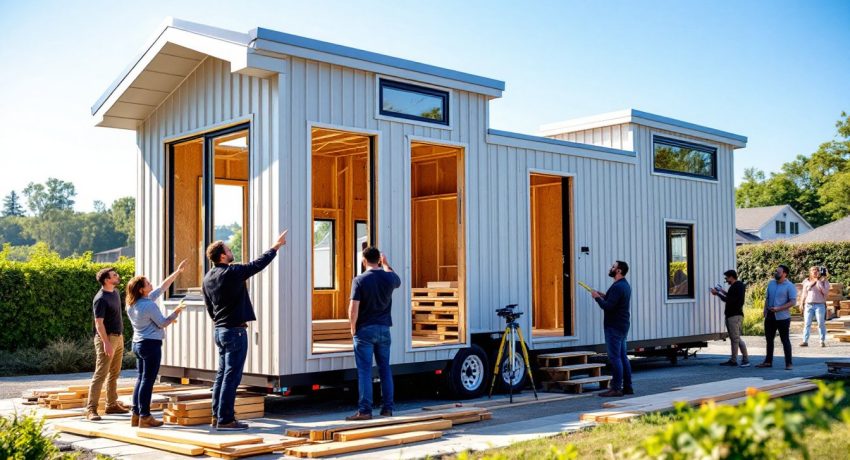
A tiny home shell is a pre-built tiny home structure, typically 200 to 400 square feet, that arrives with its framing, roof, exterior siding, windows, doors, and a weathertight envelope in place. It’s essentially a structure you can live under while you finish the interior: drywall, flooring, electrical, plumbing, insulation, cabinetry, and fixtures. Think of it as the middle ground between a kit home (where you’re assembling lumber yourself) and a turnkey model (where you buy fully finished but lose control over design and pay a premium).
Why consider a shell? Cost is the first answer. A quality tiny home shell runs $20K to $50K depending on size, materials, and builder reputation, roughly half the price of a finished unit. Time is the second: instead of waiting 12–18 months for custom construction, you can pick up a shell in months and spread the interior work across seasons. Third is control. You choose the layout of your kitchen, the color of your walls, the type of flooring, and whether you want luxury finishes or budget-friendly basics. Many DIY enthusiasts and owner-builders see shells as the best entry point to tiny living without the full construction burden.
Key Advantages of Buying a Tiny Home Shell
Shells hit a sweet spot for most buyers: they eliminate the complexity of foundation work, framing carpentry, and roof installation, the jobs that require heavy equipment, multiple inspections, and often licensed contractors. You get a finished, permitted structure: your job is finishing the interior, which is something many DIYers tackle on weekends or in phases.
Cost Savings vs. Traditional Homes
A finished tiny home typically costs $80K–$150K or more, depending on finishes and location. A shell can run $20K–$50K, leaving you $20K–$40K to spend on interior work at your own pace and on your own terms. Compare that to a traditional 2,000-square-foot home: land, foundation, framing, and finishing often top $300K, even in affordable regions. Tiny homes priced under $60,000 demonstrate the value proposition and show what strategic shell purchases can accomplish. Many DIYers complete interiors for $10K–$20K by doing labor themselves, sourcing secondhand fixtures, and prioritizing functionality over high-end finishes.
Customization and Design Freedom
A shell gives you a blank canvas. You’re not stuck with the builder’s cabinetry choices, appliance selections, or paint palette. Want an open concept with a lofted bedroom? Route the wiring and framing accordingly. Prefer a traditional galley kitchen? You design the layout. This flexibility is impossible with finished units. You can also stage your interior work to fit your budget. Rough in plumbing and electrical now, install finishes later. Paint walls yourself instead of paying a contractor. Install vinyl plank flooring or refinished hardwood salvaged from a demolition site. The shell lets you control not just what the home looks like, but how much you spend and when.
Where to Find Quality Tiny Home Shells
Several builders and manufacturers specialize in tiny home shells. Start by checking online marketplaces like Tiny House Listings, Marketplace, and Craigslist in your region, real inventory moves fast, and local picks save shipping costs. Dedicated tiny home builders often offer shells as a core product line: companies like Sanctuary Tiny Homes, Mint Tiny Homes, and Incredible Tiny Homes list specs, photos, and delivery timelines on their websites.
Ask for references from past buyers, not just testimonials on the builder’s site. Call someone who bought a shell and lived through the delivery and inspection process. Check if the shell is built to IRC (International Residential Code) standards and whether the builder pulls permits and arranges third-party inspection before delivery, this matters for financing and insurance later. Attend tiny home expos if one’s near you: you’ll see multiple shells side by side, ask questions in person, and avoid surprises. A few hours in person beats weeks of email back-and-forth.
Publications like Curbed and Apartment Therapy regularly feature tiny home trends, builder interviews, and design stories that help you understand the market and spot reputable names versus fly-by-night operations. If a builder has been featured in a major publication, that’s a plus for credibility, though it’s not a guarantee.
What to Evaluate Before Making Your Purchase
Before you commit, verify five critical things:
1. Foundation and Delivery. Does the price include delivery to your lot, or are you hauling a 30-foot shell yourself? Will it arrive on wheels (a trailer-style tiny home) or on a flatbed? Check your local zoning and whether your lot can legally support a tiny home. Some jurisdictions restrict them to RV parks or require a foundation. Don’t assume.
2. Insulation and Climate Fit. A shell suitable for sunny Arizona may not have enough R-value for Minnesota winters. Ask the builder what insulation is installed, what R-values are in the walls and roof, and whether it’s suited to your climate zone. Under-insulated shells mean high heating and cooling costs, expensive false economy.
3. Permits and Documentation. Request proof that the shell was built under permit, passed inspection, and comes with a signed-off certificate of compliance. This paper trail matters when you finance, insure, or eventually sell. Some buyers assume a shell is code-compliant: builders sometimes cut corners. Don’t guess.
4. Electrical and Plumbing Rough-In. Is wiring already run inside the walls, or are you running it? Is there a water heater hookup and drain rough-in, or blank slabs? Knowing what’s pre-installed saves you hundreds in labor. Ask for electrical plans and plumbing schematics.
5. Warranty and Support. What does the builder guarantee? Roof leaks? Structural cracks? For how long? Can you call the builder after year one if issues crop up, or are you on your own? A responsible builder stands behind their work.
Finishing Your Tiny Home Shell: What Comes Next
Once your shell is delivered and positioned, you’re looking at interior work: insulation (if not already in), drywall, electrical finish-out, plumbing fixture installation, flooring, cabinetry, and painting. A typical timeline is 3–6 months for one person working part-time, or 4–8 weeks if you have a crew and work full-time.
Start with the hidden work: electrical, plumbing, and HVAC rough-in inspection. Get permits for any structural or system changes. Drywall comes next, messy and tedious but straightforward. Then flooring, which sets the tone and covers most visible surface area. Cabinetry and built-ins follow. Painting is last so you don’t mark up fresh surfaces.
Budget realistically. A modest interior finish (drywall, basic flooring, simple cabinetry, standard paint) runs $10K–$20K in labor and materials if you do most work yourself. A nicer finish with quality flooring, custom cabinetry, and upgraded appliances easily reaches $30K–$40K. Many DIYers complete shells in phases, spreading costs over 12–24 months and tackling different rooms or systems as time and budget allow.
Most importantly: don’t rush through permits, inspections, or code compliance. A shell that wasn’t built to code stays non-compliant even after you finish the interior. Before you buy, verify that the structural and systems side is solid. Then you can have fun and save money on the cosmetic and customization layers where DIY work shines.