
Table of Contents
ToggleA 30-inch under cabinet range hood is one of those kitchen upgrades that doesn’t announce itself but quietly handles a serious job. It sits tucked beneath your cabinetry, pulling steam and cooking odors up and away before they settle into your walls and curtains. If you’re planning a kitchen remodel or just tired of your stovetop turning your kitchen into a sauna, an under cabinet range hood is a smart, space-saving choice. This guide walks you through what to look for, how to install one, and how to keep it running smoothly for years to come.
Key Takeaways
- A 30-inch under cabinet range hood is space-saving and uses dead space beneath cabinetry to remove cooking fumes and moisture without eating up cabinet storage.
- Choose a ducted hood for permanent odor and moisture removal or a ductless model for easier installation, keeping in mind that ductless units require regular filter replacement every 3–6 months.
- For effective ventilation, ensure your 30-inch under cabinet range hood has at least 250–300 CFM for electric cooktops and 300–400 CFM for gas cooktops to handle cooking demands.
- Install the hood 30–36 inches above the cooking surface with proper ductwork clearance, a dedicated electrical outlet, and reinforced cabinet framing to ensure safe and effective operation.
- Regular filter maintenance is essential—use reusable mesh filters for ducted models and inspect ductwork annually to prevent grease buildup and fire hazards.
What is an Under Cabinet Range Hood?
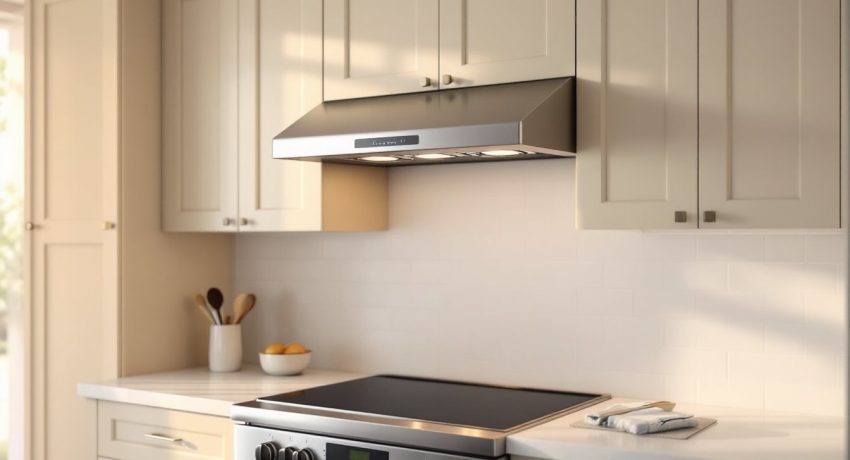
An under cabinet range hood is mounted directly beneath your kitchen cabinets, flush against the underside. It pulls cooking fumes and moisture upward through ductwork (either vented outside or recirculated through filters back into the room). Unlike island or wall-mounted hoods, it doesn’t eat up cabinet space above your stove, it uses the dead space underneath instead.
The 30-inch size aligns with standard range widths, making it the most common choice for residential kitchens. It’s smaller than a 36-inch or 42-inch model but still moves enough air to handle everyday cooking. An under cabinet hood works well in galley kitchens, tight spaces, and homes where a bulky overhead hood isn’t practical.
You’ll find two basic venting options: ducted (vented outside through your wall or roof) and ductless (recirculating). Ducted models are more effective at removing moisture and odors for good, while ductless models are easier to install but require regular filter changes. Many homeowners prefer ducted systems because they actually remove humidity from the space rather than just filtering and recirculating it.
Key Features to Look for in a 30-Inch Under Cabinet Range Hood
When shopping for a 30-inch under cabinet range hood, focus on ventilation power, noise levels, controls, and finish options. A stainless steel or white finish matches most kitchen styles, while soft-touch electronic controls feel more premium than basic mechanical switches. Look for halogen or LED lighting, LED lasts longer and runs cooler, which matters in a confined space above a hot stove.
Speed and control options matter too. A three-speed fan lets you adjust for a quick breakfast versus a full roasted-chicken dinner. Some models include a delay-off timer, so the hood keeps running for a few minutes after you turn off the stove to clear lingering odors.
CFM and Ventilation Power
CFM (cubic feet per minute) measures how much air the hood moves. A good rule of thumb is 100 CFM per linear foot of cooktop, so a 30-inch (roughly 2.5 feet) range should have at least 250 CFM. But, many homes with electric coil stoves do fine with 200–250 CFM, while gas cooktops benefit from 300–400 CFM because they generate more heat and moisture.
Check if the hood’s CFM rating assumes ducted or ductless operation. Ductless models often underperform compared to their specs because filters restrict airflow. If you’re installing a ductless hood, look for a unit rated at least 300 CFM to account for this loss. Keep in mind that ductwork design also affects performance, long runs, too many elbows, or undersized ducts reduce real-world CFM.
For an accurate recommendation, consult home improvement guides specific to your kitchen layout and cooktop type. Building codes don’t mandate a minimum CFM for residential kitchens, but ventilation standards suggest 150–300 CFM depending on the appliance.
Noise Level Considerations
Range hoods are loud. Most under cabinet models run between 65 and 80 decibels at full speed, roughly equivalent to a loud conversation or a blender. If your kitchen opens into a living area, noise matters more than if it’s isolated.
Brands often list noise levels in sones (a perceptual scale) or decibels. Lower is always better. A difference of 5–10 decibels is noticeable: 3 sones feels noticeably quieter than 6 sones. High-end models with insulated housings and dampening materials run closer to 65 dB at low speed. Budget models might hit 75–80 dB even on low.
If noise is a concern, test the hood in a showroom or read owner reviews that mention sound levels during regular use. The cheapest hood on the shelf often sounds like a jet engine on its highest setting.
Installation and Space Requirements
A 30-inch under cabinet range hood needs specific clearances to work safely and effectively. The bottom of the hood should be 30 to 36 inches above the cooking surface (check your unit’s manual, some allow 24 inches for electric cooktops). Too high and it loses suction: too low and it risks heat damage to the hood itself.
You’ll need clearance space behind and above the hood for ductwork. If you’re venting outside, plan a straight run of 6-inch or larger ductwork to the wall or roof. Flexible ductwork works, but rigid ducts perform better and resist grease buildup longer. Avoid rigid ducts under 6 inches: they create unnecessary noise and restrict airflow.
Electrical requires a dedicated 120-volt outlet positioned near the hood location (check your local electrical code). Some homeowners run this outlet behind the cabinet for a cleaner look. If you don’t have power nearby, you’ll need to run a circuit, a job for a licensed electrician in most jurisdictions.
Before installation, verify cabinet construction. The hood mounts to studs or cabinet framing, not just drywall. If your cabinetry sits over a soffit or filler piece, you may need to reinforce it. Ductwork routing depends on your attic access and wall layout. Home renovation guidance suggests planning ductwork paths before purchase to avoid expensive rework.
If ducting runs horizontally through a wall cavity, install it at a slight upward angle (about 1/4 inch per foot) to prevent grease pooling. If venting through the roof, ensure the penetration is properly flashed to prevent leaks.
Many homeowners choose to hire an HVAC contractor or carpenter for the ductwork and mounting, it’s not complicated, but mistakes cost time and money later. The actual hood installation (bolts and electrical connection) is straightforward if the cabinet framing is solid.
Maintenance and Filter Options
Your filter choice determines long-term maintenance burden. Mesh or baffle filters (aluminum or stainless steel) are washable and reusable, you remove them quarterly or semi-annually, rinse out grease buildup under hot water, and pop them back in. They last years if cared for properly and cost nothing to replace repeatedly.
Charcoal or carbon filters (found in ductless models) trap odors but can’t be cleaned: you replace them every 3–6 months depending on cooking frequency. A single replacement might cost $30–60. They’re mandatory for ductless hoods and optional (not needed) for ducted models that vent outside.
For a ducted hood, skip the charcoal filter and use mesh alone. Charcoal adds unnecessary expense and airflow restriction if you’re already venting fumes outside. The mesh filters trap grease particles: the ductwork carries the moist air outside where it belongs.
Grease buildup in your ductwork is the silent killer. If you don’t clean filters regularly, grease accumulates inside the ducts, reducing airflow and creating a fire hazard. Inspect your ducting annually if you cook frequently. A flexible duct with heavy grease might need replacement: rigid ducts can sometimes be cleared with a brush and hose, but it’s messy work.
LED bulbs in the hood last 25,000–50,000 hours, so you may never replace them. If a bulb does burn out, replacement is usually a simple pop-in process, check your manual for specifics. Expert home improvement resources offer detailed guidance on routine hood maintenance and seasonal cleaning.
Conclusion
A 30-inch under cabinet range hood is a practical upgrade that solves real kitchen ventilation problems without stealing visible space. Focus on CFM rating for your cooktop type, realistic noise levels, and proper ductwork installation. Maintenance is straightforward if you stay on top of filter cleaning. Done right, it’ll run quietly and effectively for a decade or more, and keep your kitchen from smelling like last week’s dinner.